Monday, November 8, 2010

Extreme Popular Body Girl Piercings

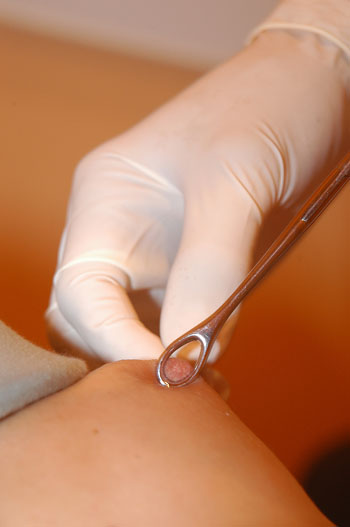
Extreme Popular Body Girl PiercingsBody piercing is when a needle is put through part of the body and then a foreign object is inserted as jewellery. Eventually, the skin around the jewellery heals and a hole is left. The hole is the piercing. It is perfectly safe when done by professionals who are careful.DO NOT pierce your own belly button. The piercing needs to be done with a sterilized needle, gloves and other sterilized pieces of equipment.

You must opt for a parlor with wide range of jewelry so that you can pick up the required piece. But before doing so, you must know what kind of jewelry is safe on your part because there are chances of some metals for causing infections during new belly button piercing. Surgical stainless steel jewelry is preferred. Jewelry made of solid gold, titanium, or niobium may also be used.

Put on loose fitting clothes. Tight apparel will irritate the belly button. Take it easy and relax. Often, it is nervousness that causes discomfort. Breathe in a controlled manner. Focus on inhaling and exhaling. Concentrating on your breath (or other objects) will sooth your muscles. This will reduce the pain.

The first and most important thing to keep in mind Extreme Popular Body Girl Piercingsis that you should not touch your new piercing unless absolutely necessary. It is recommended that people clean navel rings once a day with warm water and antibacterial soap and avoid using any creams or alcohols that will irritate or dry the skin.

Belly Button piercing has been prevelant for centuries and can be traced back to the ancient Greeks, Egyptians and Indians. Body piercing made a statement and stood for their status in society. Many piercings were believed to represent a connection with the Gods. As time evolved, society and the perception of piercing changed, the only accepted piercings were that of the ears of women. The truth be told is that body piercings, especially rings look good.

The History of Body Piercings

The History of Body PiercingsBody piercings have seen a resurgence of interest in the last ten to twenty years and are becoming more and more a part of the mainstream Western culture. Take a look at any fashion or entertainment magazine and you’ll see plenty of well-known celebrities with body piercings like navel rings or a labret. You might be surprised to find out that piercing is actually an ancient form of expression that most cultures have practiced at some time or other for thousands of years.

Egyptian body piercings reflected status and love of beauty

The earliest known mummified remains of a human that was pierced is over 5,000 years old. This worthy gentleman had his ears pierced with larger-gauge plugs in his ears, so plugs may be one of the oldest forms of body modification there is! We also know that the Egyptians loved to adorn themselves elaborately, and even restricted certain types of body piercings to the royal family. In fact, only pharaoh himself could have his navel pierced. Any one else who tried to get a belly button ring could be executed. (Tell that to Britney Spears!) Almost every well-to-do Egyptian wore earrings, though, to display their wealth and accent their beauty. Elaborate enameled and gold earrings frequently portrayed items in nature such as lotus blossoms.

Body piercings are also mentioned in the Bible. In the Old Testament it’s obvious that body jewelry is considered a mark of beauty and wealth, especially for Bedouin and nomadic tribes. In many cases, body jewelry was given as a bridal gift or as part of a dowry. It is clear that piercing was a sign of status and attractiveness in Biblical times.

Romans were practical piercers

Romans were very practical people, and for them piercing almost always served a purpose. Roman centurions pierced their nipples not because they liked the way it looked, but to signify their strength and virility. It was a badge of honor that demonstrated the centurion’s dedication to the Roman Empire. As a symbol, it was important and served a specific function, unifying and bonding the army. Even Julius Caesar pierced his nipples to show his strength and his identification with his men.

Genital piercing through the head of the penis was performed on gladiators, who were almost always slaves, for two reasons. A ring through the head of the penis could be used to tie the organ back to the testicles with a length of leather. In gladiatorial combat, this prevented serious injury. With a large enough ring or bar, it also prevented the slave from having sex without the owner’s consent. Since the gladiator was “property,” a stud fee could be charged to another slave owner for the highly prized opportunity to raise the next generation of great fighter.

Making love or war, piercing makes it better

The History of Body PiercingsGoing across the ocean at around the same time, the Aztecs, Maya and some American Indians practiced tongue piercing as part of their religious rituals. It was thought to bring them closer to their gods and was a type of ritual blood-letting. The Aztec and Maya were warrior tribes, and also practiced septum piercing in order to appear fiercer to their enemies. Nothing looks quite as frightening as an opponent sporting a huge boar tusk thrust through his nose!

This practice was also common among tribes in New Guinea and the Solomon Islands. Some of the materials commonly used were bone, tusks and feathers. Hundreds of years later, French fur trappers in Washington State discovered American Indian tribes who wore bones through their septum and called them the Nez Perce, meaning “Pierced Noses” in French. It’s interesting that civilizations separated by thousands of miles and even centuries often developed a love for the same kind of body piercings to enhance certain features, isn’t it?

In Central and South America, lip labrets were popular for purely aesthetic reasons – women with pierced lips were considered more attractive. In fact, the holes were often stretched to incredible size as progressively larger wooden plates were inserted to emphasize the lips as much as possible. (Kind of like collagen today). The Aztecs and Maya also sported lip labrets of gold and jade, many of them elaborately carved into mythical or religious figures or sporting gemstones. These were seen as highly attractive and to enhance sexuality.

As the world moved into the dark ages, interest in piercing died down somewhat and the medieval church began to condemn it as sinful. For a few hundred years, Western civilization abandoned the practice. As the Renaissance went into full swing, however, interest in piercing began to pick up again.

A new era and a new interest in body piercings

Sailors became convinced that piercing one ear would improve their long-distance site, and so the site of a sailor with a gold or brass ring became common. Word also spread that should a sailor be washed ashore after a shipwreck, the finder should keep the gold ring in exchange for providing a proper Christian burial. Sailors were both religious and superstitious, so they generally spent a lot for a large gold earring to hedge their bets.

Men became much more fashion-conscious during the Renaissance and Elizabethan eras, and almost any male member of the nobility would have at least one earring, if not more. Large pearl drops and enormous diamond studs were a great way to advertise your wealth and standing in the community. It could also designate royal favor if your earring was a gift from a member of the royal family.

Women, not wanting to be outshone by the men in all their finery, began to wear plunging necklines, with the Queen of Bavaria introducing the most outrageous, which consisted of not much at all above the waist. In order to adorn themselves, women began piercing their nipples to show off their jewelry. Soon they began wearing chains and even strands of pearls draped between the two.

Men and women both discovered that these nipple piercings were also delightful playthings in bed, adding sensitivity to the breasts and giving the men both visual and tactile stimulation. Men began getting pierced purely for pleasure as well. While not entirely mainstream, piercing of the nipples and, occasionally, the genitals, continued to hold interest for members of the upper crust of society in Europe on and off for the next few hundred years.

The next resurgence of interest was, surprisingly, during the Victorian age, which is usually seen as very repressed. Prince Albert, future husband of Queen Victoria, is said to have gotten the penis piercing that is named after him in order wear the tight-fitting trousers so popular at the time. The ring could then be attached to a hook on the inside of one pant leg, tucked safely away between the legs for a neat, trim look. Although we have no record of Victoria’s response to the piercing itself, there is ample evidence she was wildly in love with her husband and almost never left his side after their marriage!

Soon, Victorian men were getting Prince Albert's, frenums and a variety of other piercings purely for the pleasurable sexual effects, and women were doing the same. By the 1890’s, it was almost expected that a woman would have her nipples pierced. In fact, some doctors at the time suggested it improved conditions for breastfeeding, although not all agreed. It was an interesting double standard –- plenty of people were doing it, but no one was talking about it.

Modern-day body piercings

The History of Body PiercingsIn the last hundred years or so, body piercings in the Western world have mostly been limited to the ears, a standard hold-over from the fact that both men and women wore earrings during Elizabethan times. The Puritan movement did away with men wearing earrings, however, and it didn’t really regain popularity until recently.

Nose rings found new interest when young people (they were called hippies then) from the U.S. began traveling in India extensively looking for enlightenment in the 1960’s. They noticed the nostril rings that most women had been wearing there since the sixteenth century. In India, this was a form of traditional, accepted adornment and was often linked to an earring by a chain. For rebellious teens from America, it was a great form of rebellion.

After bringing nose piercings back to the U.S., the interest in body piercings of all kinds quickly caught on during the 1980’s and 1990’s. Celebrities, sports stars and singers all began sporting a variety of piercings. Soon, high school students and even stay-at-home moms were flashing new body piercings. And the rest, as they say, is history!

Extreme Art Body Piercing For Girls

Extreme Art Body Piercing For GirlsExtreme Art Body Piercing For Girls
Body piercing is an art which is extremely popular with youngsters. Piercing is done on various parts of the body to give a funky look. Almost any part of the body can be pierced. Ears, tongue, eyebrows, naval, nostrils, nasal septum, lips and nipple piercing are some of the most common type of piercing.

It is an art that has being followed from centuries. Egyptians, Extreme Art Body Piercing For GirlsGreeks, and Romans were well versed with piercing and tattooing. There were different connotations attached with the art. Decorating the body to stand out among the crowd, to cast off evil eyes, were some of the causes behind this. However, there is a certain element of risk associated with it. Since, this involves piercing rings and barbells, it must be done carefully. Hygiene must be given prime importance. Body piercing is a serious decision. It is advisable to seek complete guidance from doctors before getting the piercing done. You could also ask advice of friends, relatives who have got it done. A thorough examination on the possible infections or irritations can help you.

Most of the youngsters and teenagers prefer this. It gives a funky and fair look. Both men and women get it done for various reasons. Many of them do it to get a nice image. Young girls prefer naval piercing to look clear. It can cost you a certain amount that you must be prepared to spend in advance. Healing may also take a long time depending on the type of piercing.

Body Piercing Aftercare and Healing Essentials

Body Piercing Aftercare and Healing EssentialsThe most important thing to keep in mind after your body piercing has been performed is that you have essentially just sustained an open wound, and you should be caring for it exactly like you would a surgical wound or injury. That is, with the same kind of care, cleanliness and attention that you would to a serious injury to make sure that you don’t scar or get an infection. There are two different types of body piercings to consider: non-oral and oral.


Non-oral body piercing aftercare

Keeping your piercing clean can’t be stressed too much! It just can’t. Twice a day, every day, without fail. No excuses. Use a mild antibacterial soap that doesn’t have fragrances in it, such as Provon® Antimicrobial Lotion Soap or Satin® Therapeutic Skin Cleanser, both of which are approved by the Association of Professional Piercers (APP). The best place to clean your piercing is usually in the shower, where the warm water will help you loosen and remove those crusties around the base of your jewelry. Use a cotton swab or a Kleenex to remove these, and then throw the swab or Kleenex away. Never use a washcloth –- these things are breeding grounds for germs and bacteria! The same for bath towels after your shower!

Then, with clean hands, gently cleanse the area with the soap and turn the jewelry so that the soap gets in the piercing and let this sit for a minute or two. After rotating it again, rinse thoroughly with warm, clear water. Make sure you get all of the soap out to prevent irritation. The rinsing is very important, so try to be thorough without irritating the area. It often helps to cup your hands and drizzle water over the area, since the shower stream can be a little too hard to aim directly on the area.

Don’t forget your sea salt soaks

Body Piercing Aftercare and Healing EssentialsAfter cleansing, a sea salt soak helps to draw out any piercing infection and impurities while soothing the area and calming any inflammation that may be present. Mix about ¼ teaspoon of sea salt with 8 ounces of warm water. Using a disposable cup, soak your piercing in this for ten minutes the first time, and five minutes each time after that. If your piercing is in a location that makes this difficult, apply the solution with cotton swabs, tissues or some other disposable product that’s soft and clean. Never use a hanky, washcloth or any other item that is going to be reused.

Always pat your piercings dry with cotton balls, cotton swabs or tissues –- don’t rub them, pat them. This reduces irritation and possible tearing of the skin and helps promote healing. Although it seems to be a minor step, keeping your piercings dry is actually an essential part of piercing aftercare because it reduces the opportunities for bacteria to breed (they love a warm, moist place to play).

If you aren’t sure about mixing your sea salt soaks properly or it’s too inconvenient, there’s a new alternative on the market that’s less messy and is portable. H2Ocean® Piercing Aftercare Spray is a pre-mixed sea salt solution containing lysozyme, a natural antibacterial that is gentle to the skin. Simply spray it on the area and allow to drip dry; it’s easy to use because of their patent-pending compressed air delivery system that produces a fine mist. This product is guaranteed to heal navel piercings in only a month and a half if used regularly and is highly recommended by numerous piercing communities like BME and Prick magazine.

H2Ocean® also comes in a portable size for your pocket or purse, which makes piercing aftercare away from home easier. X-pressions Piercing Aftercare Spray is also available for both oral and non-oral body piercings and is a mild antibacterial solution with purified water in a non-aerosol, pump spray with a pleasant, peppermint flavor.

Once a day (not more often, because you’ll be unnecessarily irritating the area), check that the ends of your piercing jewelry are firmly screwed on. But wash your hands with antibacterial soap first.

And now, a few “don’ts”

  • Don’t ever put hydrogen peroxide or alcohol on a piercing -- they are too drying and will delay healing.
  • Don’t ever use Neosporin on a piercing -- it can actually trap bacteria. Read the label; it actually says, “Not for puncture wounds.” Guess what? A piercing is a puncture wound.
  • Don’t ever remove your piercing jewelry before the piercing is completely healed, which may take months or up to a year. If you suspect a piercing infection, see your piercing professional or doctor first.
  • Don’t sleep on your piercing until the initial healing phase is over.
  • Don’t wear tight clothing over your piercing during the initial healing phase.

Oral piercing aftercare

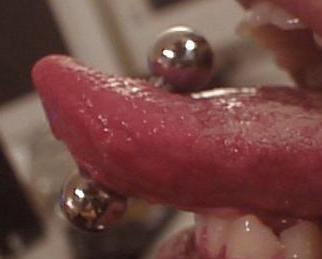
Body Piercing Aftercare and Healing EssentialsDuring the first three to six weeks after an oral piercing, rinse your mouth with an antibacterial agent after every meal to kill bacteria and make sure not tiny food particles aren’t lodged around your piercing just waiting to fester and turn into problems later. There are several excellent products on the market for this, including APP recommended Biotene and Tech2000 Dental Rinse; these have the proper ingredients and have the right potency to get the job done without being too strong.

Don’t bother with mouthwash, because it’s not strong enough to do anything but cover your bad breath, which won’t be much consolation when you have a swollen, tender tongue because of improper aftercare. You can also use a commercial antibacterial rinse, but dilute it so that it isn’t too strong. If your tongue develops a whitish or yellowish look, your mouth rinse is too strong and will slow healing.

Sea salt rinses … ahh!

Mix the familiar warm water solution of 8 ounces water to ¼ teaspoon sea salt and swish this in your mouth for 15-20 seconds after drinking anything other than water and after smoking. It’s not only an aid to healing, but can be very soothing to the pierced area. If your oral piercing is sore or swollen, you can find some relief by allowing crushed ice to melt in your mouth. Popsicles, ice cream and the like also work, but will need to be followed up, like everything else, with a sea salt rinse (or H2Ocean®).

Brush, brush, brush

You can keep your tongue and piercing as clean as you want, but if you don’t brush your teeth well, you’ll still have millions of bacteria in your mouth. Try to brush your teeth three times a day during the first several weeks of healing. Buy a new soft-bristle brush that will be gentle on your piercing. Don’t use a brush that you’ve already used before your piercing, as it will harbor old germs. You should also gently brush the balls on the ends of your piercing jewelry to prevent the natural build-up of plaque on your jewelry.

Oral piercing “don’ts”

  • Don’t smoke, chew gum or use snuff or rub during the healing period; these increase the risk of piercing infections astronomically.
  • Don’t play with the piercing jewelry or click it against your teeth; this can cause cracking of your tooth enamel.
  • Don’t engage in any activities, including kissing, that exchange body fluids during the initial healing period of several weeks.

General tips to improve healing success

Proper piercing aftercare is the primary reason for a successfully healed body modification, but your overall health and how well you take care of yourself is also a contributing factor. If you are run-down or your immune system is compromised, you will not heal as quickly and you will be more prone to infection. For that reason, you should keep in mind a few things whenever you have any kind of piercing in order to help ensure that your piercing aftercare measures are given the best chance of success:

  • Drink plenty of fluids, especially water. Eight glasses of day at the very least.
  • At least eight hours of sleep a night
  • Try to limit the amount of stress in your life
  • Vitamin C and Zinc supplements to help speed the healing process
  • Lots of fruits and vegetables, and a multi-vitamin if needed
  • If the pain bothers you, take Ibuprofen. If you are comfortable, you are less likely to fidget with the piercing.

Signs of trouble

Even with excellent piercing aftercare, there will be some swelling at the site of a piercing for a few days. You’ll also have some clear, watery discharge and perhaps some mild bleeding. The bleeding will usually stop within 24 hours, while the discharge may last for several days or weeks. This is simply drainage of the wound and actually helps prevent piercing infection.

Signs that the piercing is in trouble include:

  • Discharge that becomes noticeably thicker and is yellow or green in color. This is a sign or infection and should be checked by a doctor.
  • Inflammation that lasts longer than a few days, with redness and irritation. See your piercing professional or doctor.
  • Red streaks from the piercing site and a fever, along with body aches. See your doctor.
  • Hives, redness, itching and irritation around the piercing, which may signal an allergic reaction to the piercing jewelry. Your piercing professional can try replacing it with an alternative metal.
  • Difficulty breathing or wheezing after your piercing, or a feeling that your mouth or throat are swelling closed. Seek emergency attention immediately!

So how long does all this healing take?

Body Piercing Aftercare and Healing EssentialsIf you perform your piercing aftercare properly, your body piercing will heal cleanly and leave you with a beautiful new piercing with no scarring, migration or keloids. The time it takes to achieve this, however, will vary depending upon what kind of piercing it is.

The general timeframes listed below are just for reference. All of these depend upon your individual body’s response, how much stress you are under and a thousand other variables.

Earlobe or Eyebrow: 6 – 8 weeks
Genitals: 4 weeks – 4 months ..
Labret/Lip: 6 – 8 weeks
Navel: 6 – 18 months
Nipple: 3 – 6 months
Nostril: 3 months – 1 year
Septum: 6 – 8 weeks
Tongue: 4 – 6 weeks
Cartilage: 3 months – 1 year....

Exist Body Piercing In Europe And USA

Body piercing has existed since ancient times but it wasn’t until the 1980’s that body piercing for men and women in Europe and USA really became fashionable. Today multiple piercing is common in both men and women. If you think your body piercings are cool, take a look at these.

I wonder if this guy rattles when he walks.

Exist Body Piercing In Europe And USA
This gives a new meaning to the phrase “wearing a corset”. It is kind of sexy looking but looks very painful. I bet she can’t sleep on her back.

Sunday, November 7, 2010

Extreme Body Piercing

Extreme Body PiercingI have been keeping as busy as I can to do not have to write this article…..

I’m not a huge fan of scarification; even so I will try to keep it as neutral as I can….

You can basically divide the scarification process in 2:

1) Branding (scarification through burns, from heat and others; the definition of the world branding is literally:

-an identifying mark burned on livestock with a branding iron.

-mark with a branding iron; disgrace, condemn

-Mark of ownership of an animal

-Product identification

Extreme Body PiercingThere are basically 2 types of branding, “strike” (is when the artist take a piece of metal and repeatedly burn the skin over a drawing) and “cautery” (is when the artist uses a cautery pen to burn the image on the person’s skin).

2) Cuttings (fine scarification using a thin blade, and to this process you can add colour using tattoo ink, sometimes it can include the removal of skin patches).

Ok, now you know the difference between branding and cutting…….

Let me share a bit more with you:

If you decide to choose cutting the procedure will be more or less like:

- topical anaesthetic is first applied to the skin

- the design is drawn with ink onto the desired area

- The artist then traces the design’s outline with a scalpel on your skin, you do not have to worry at this point, it will be a fairly shallow cut.

- After the out line the artist will apply more anaesthetic and wrap your skin for few minutes (not because he thinks that you are a wimp), but it helps the blood diversion, and make easier to work.

- Depending on the size and the amount of work involved the process can take something like 4 hours of: cutting, anaesthetic applying, wrapping and waiting until the volume of blood decrease.

If your choice is branding, the process is more or less like marking cattle (did you ever see it on TV and thought ,” poor animal”, ok so we are speaking the same language here; anyways the procedure goes more or less like so:

- You choose the image that you want (try to keep in mind that after burning the human tissue tents to expand quite a bit, and as the name say, you will be inflicting a third degree burn on your skin).

- try to stick with simple designs, you should know that the results vary quite a bit, and no artist can predict for sure how thick or thin the scar will be, it depends on each one of us healing process. Simpler the design easier is to predict the results that you will get.

- Try to choose a flat are of your body, preferably away from bones and vital organs

- The looks of the scar depend also of the how long the blade will be in contact with the skin, the artist should never apply pressure to it, in order to get a heavier scar the artist have to keep the blade in touch with your skin for longer.

No, you want a very elaborated image, sure, no problem at all, I actually agree with you, once you are doing something at this level do it well……but those designs have to be very well panned on paper and after well shaped on the metal blade, the shapes should be between 1 to 3 inches long, so the iron can retain the heat long enough to make a clean and even strikes. Is a good idea to have the artist to place the blades on your skin to check if all the surface of the blade is in contact with your skin evenly.

Before starting the process you should ask the artist to test the blades, just to be sure that is all ok, and you wont have problems with metal distortion, caused by an uneven distribution of heat thru the metal or by the metal to be to thin or to small. The artist should test the blades on a piece of metal to find out the perfect balance between heat and pressure, so he won’t have to perform the tests on you!!!! Is not really the best of the options use your body as test piece.

The artist should have at least one assistant to hold on to the propane torch.

One last thing, before you start with your scarification:

The area that you will get it done has to be extra clean….not only the area but the surroundings as well (I know that it sounds like stating the obvious, remember at this moment you are nice and comfy reading this article, but if you decide to go under the scarification process you be under some pressure and forgetting small things can cause a large impact after)

Extreme Body PiercingThe interesting part of the scarification process is that the healing process is a huge part of how your scar will look after. No one can guarantee 100% how your scar will look after healing, but you should really try to avoid getting it infected.

How? Not that simple….

First be sure that you got it done in a clean and professional place, do not think that because scarification was used by primitive tribes and cults, that you can get it done by your sisters friend that is a famous dominatrix….look for places that are experienced, have a portfolio with works previously done and also try to find an artist that will explain to you all the process in a way that you feel really comfortable about what you are doing.

If your choice was the cutting scarification:

The caring process will include tons of cleaning, meaning after around 6 hours you will have to remove the bandage, and wash the place with cool water and soap, rinse it and gently pat dry it. You will need to do it 2 or 3 times daily, for the first 4 to 6 weeks, depending on the type of the scarification and the place that you got it done; it usually takes between 6 to 8 weeks for the primary healing and few months for you to get the true final result.

There is also something called agitation of the scarification, it is used to intensify the looks of your scar, if you want it to have a larger amount of scar tissue on it or not. The cute part of this process is that the most used method of doing it is doing something that your mother probably told you do not do your whole life, picking at the scabs that will form…The other way is a bit more, how can I put it, intense, you will have to rub the area with a soft toothbrush dipped in hydrogen peroxide or rubbing alcohol……..and if you really are up to it, you can do them both first picking the scab and after brushing it, lovely, just keep in mind that you have to do it gently………being rough or over picking it can damage the looks of the final image…..by the way, only do the agitation after few days that you got it done, do not rush things, please……..and also feel free to call the artist if you have any question, I’m sure that he wont think that you are an idiot if you do not know exactly what to do and how to do.

You choose the branding:

You also will have a large amount of after caring to do, such as:
At the studio still the artist should put an anti-bacteria cream on it, cover it up with a sterile pad and get it held in place by surgical tape.
You will probably have to apply the anti-bacterial cream for 3 days, and after that you will have to clean the place around 3 times a day with hydrogen peroxide, you can stop covering the brand after 3 days that you got it done.

Extreme Body PiercingIn the case of branding, you will have to keep in mind what your mother always told you, do not pick the scabs!!!!!!!!!!!!! And after every shower clean it with hydrogen peroxide. Brands take an average of 3 to 12 weeks to heal (just reminding you: branding is a 3 degree burn on your skin), so please do not forget to be gentle and very careful while cleaning it.

Just a small note here:

I did try to be as neutral as possible while writing this article…….I’m sorry if I could not….I never got a scarification so I’m giving you the view of a person that researched and wondered for few weeks about the subject…If you have any comments to add please do so…

Body Piercing Aftercare and Healing

Body Piercing Aftercare and Healing

Body Piercing Aftercare and Healing

Body Piercing Aftercare and Healing

New Trends Beauty Eyebrow Piercing Art

New Trends Beauty Eyebrow Piercing ArtI’ve been getting quite a bit of comments and questions lately regarding anti-eyebrow piercings. Your first thought might be, exactly what is an anti-eyebrow piercing? An anti-eyebrow piercing doesn’t actually have anything to do with your eyebrow, it is actually a high cheek piercing usually set at a 45 degree angle just below the eye. Typically with the lower ball of the jewelry sticking out further then the top, but has been successfully applied the other way around, as well as some other slight variations of the normal placement.

Types Of Jewelry Used

An anti-eyebrow piercing is of course a surface piercing so the best method is to use a surface barbel although I have seen anti-eyebrow piercings successfully healed with just standard curved barbels.

Is It Safe?

Anti-eyebrow piercings are just as safe as any other piercing as long as they are performed by a qualified piercer and the proper care steps are taken to heal the piercing. You must be aware that surface piercings are one of the most difficult types of piercings to heal and are very prone to migration or rejection.

New Trends Beauty Eyebrow Piercing ArtIf you start to notice your anti-eyebrow piercing growing out or showing signs of rejection it is in your best interest to take it out immediately to avoid nasty life-long scars.

As with most surface piercings, I don’t know many people who have managed to keep an anti-eyebrow piercing intact without incident for longer then a year or two, with most showing signs of migration or rejection after only a few months.

The Bottom Line

Anti-eyebrow piercings are cool and will instantly grab attention of the average passer by. If you get one it is likely that you will end up removing it to avoid associated problems, but you also run that risk with any body piercing.

Body Piercing Basics

Body Piercing BasicsMy dad has been a body piercer for over 30 years, and although I never followed him into the profession, I have picked up a thing or two. It never ceases to amaze me how many people do not know the basics of maintaining their piercings. The most surprising question I hear asked over and over is “how long to I have to clean it?”.

It’s really one of those questions that makes you stop and think why this person wants to be pierced. That doubt in you mind is confirmed by the look of shock on their face when to they’ll need to continue cleaning it at least once a day, more so in the first few weeks.

Cleaning Tips

When you first get a major piercing (like a belly ring), you will notice that a gooey substance will leak from the ‘wound’ for the first few weeks. This is nothing to be concerned about as it is just body fat that the body is expelling from the area until the wound is healed. You will need to clean this fat off the piercing on a regular basis to prevent infection. This body fat tends to dry hard, do not move the ring or barbell around too much when this occurs, as it will tear the healing flesh around the ring/barbell.

Body Piercing BasicsThe best way to clean your new piercing is boil a kettle and place the hot water in a bowl. Dissolve some salt into this water and allow to cool. When the salt-water mix becomes cool enough to touch (but still warm) dip a cotton tip into the water and then gently start to clean the ring/barbell and surrounding skin. Be prepared to use a number of cotton tips, as you need to avoid ‘double dipping’ the tip. In addition, you will need to use a fresh cotton tip when cleaning opposite side (i.e. a different tip for both the top and bottom of your tongue). This is to stop the spread of germs or possible infection. You will need to clean fresh piercings several times a day.

If the ‘gooey’ substance does dry onto the ring/barbell and you are unable to get it off with just the warm salt water, try having a hot shower first – this will soften the hard substance making it easier to clean.

Please Note: Avoid using things like mentho or other alcohol-based substances to clean your piercings. These substances will tighten the skin (effectively closing the wound) and trap the excess body fat and waste in the piercing, which can lead to infection.

Once the piercing has established itself, it usually will not discharge any substance, meaning that the wound has fully healed. When fully healed, you should clean your piercing at least once a day. You can do this while in the shower, just give it a quick clean to get off excess sweat and dirt.

How can you tell if the piercing is infected?

Body Piercing BasicsThe first sign of infection is generally a redness to the flesh around the piercing, and the wound continuing to discharge well after the recommended healing time (times vary depending on what you get done and the technique the piercer uses – you should be informed on healing times when you get the piercing). The area around the piercing will generally be painful. An infection can occur at any time, so you need to keep an eye on your piercing and keep it clean. If in doubt, go back to your piercer (or if not available your doctor) and get them to check it out. Infections can be very serious and may need to be tended to on a medical level – do not be afraid to enquire or ask for a professional opinion.